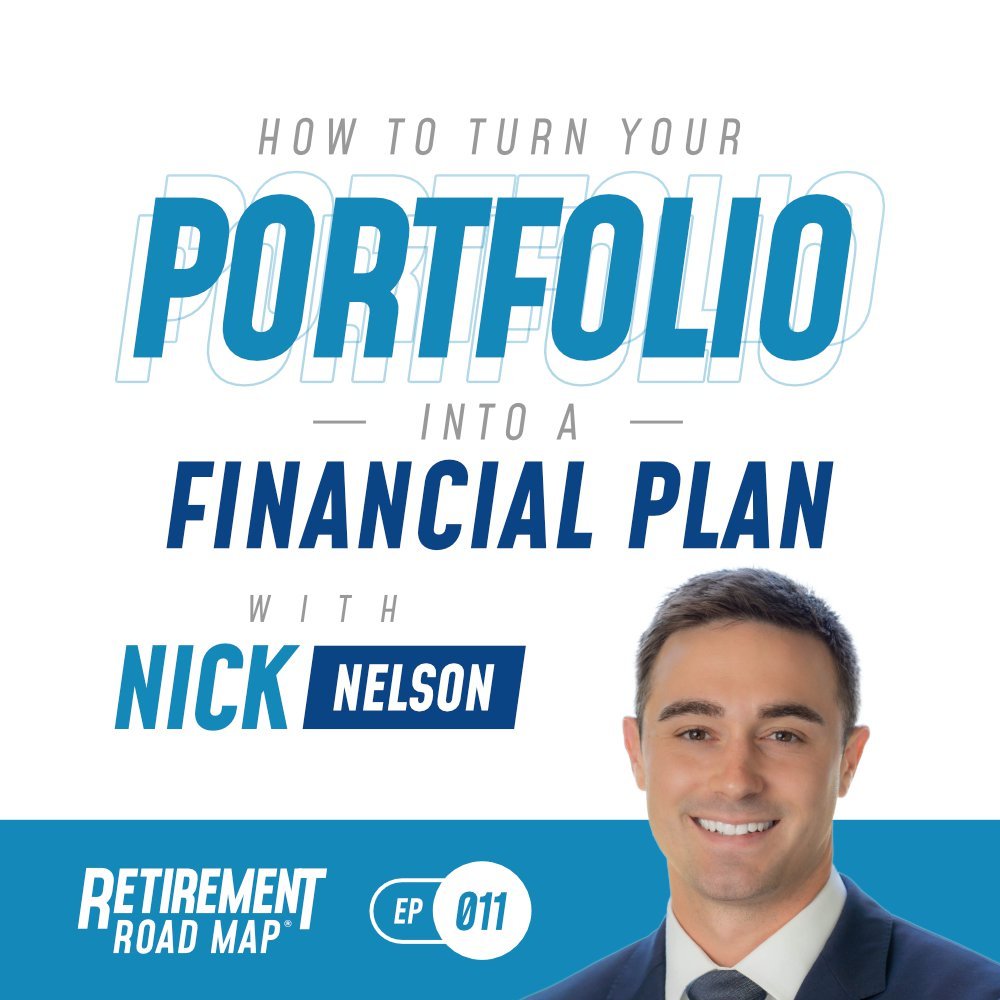

One of the biggest misconceptions investors have about retirement planning is that a healthy portfolio with large balances guarantees retirement success. But without a comprehensive plan that accounts for the income, taxes, investments, healthcare, and legacy goals, retirees can still face unnecessary risks and uncertainty down the road.
In this episode, SHP co-founder Matthew Peck is joined by SHP’s Vice President of Advisory Solutions, Nick Nelson, to break down the key differences between having a portfolio and having a complete retirement plan. Nick explains why successful retirement planning goes far beyond investment performance and requires coordination across every area of your financial life.
Together, they discuss how income planning serves as the foundation of retirement, why investment strategies must evolve during the distribution phase, and how factors like taxes, inflation, healthcare costs, and legacy planning can impact long-term financial success. They also explain how proactive planning and working with a trusted advisor can help retirees navigate uncertainty with greater confidence and peace of mind.
In this podcast interview, you’ll learn:
- Why a retirement portfolio alone may not provide the confidence needed for long-term financial success.
- How income planning serves as the foundation for every other area of retirement planning.
- Why investment strategies should change when transitioning from accumulation to distribution.
- How inflation, taxes, and RMDs can significantly impact your retirement income over time.
- The role healthcare and long-term care planning play in protecting your retirement assets.
- Why legacy planning goes beyond estate documents and helps define the impact you leave behind.
Inspiring Quotes
- “People have worked hard their entire lives. We want to do everything we can to ensure that they’re in a good position to enjoy their retirement for the rest of their life.” – Nick Nelson
- “If something does happen to you, having an advisor in place that’s going to guide your spouse, your heirs, whoever it may be, and going through that process, somebody that understands not just your portfolio, but your full comprehensive plan, there’s a ton of value there too.” – Nick Nelson
[INTERVIEW]
Matthew Peck: Welcome everyone to another edition of SHP Financial’s Retirement Road Map podcast, brought to you as always by SHP Financial. I love saying it twice, just to make sure I really hit it home. Guest today is Nicholas Nelson who’s going to be answering one of the questions that we’d love to ask everyone that walks through the door of SHP the first time, do you have a plan or do you have a portfolio?
And what are the differences? How do you know if what you have is going to stand the test of time? Is it an actual plan? Does it, actually, do everything that you want it to do from a tax perspective, an income perspective, a healthcare perspective, legacy, and so on? And if you can’t answer that confidently, then you’re absolutely in the right place. Nick is our Vice President of Advisory Solutions. He has been with SHP for many…
Nick Nelson: Almost 10 years in June.
Matthew Peck: Yeah, absolutely. So, basically, call it 10 years, more than 10 years at this point in time. We all know time sort of is all relative and kind of moves in different ways. So, Nick, tell me, how do you tell the difference between a portfolio and a plan?
Nick Nelson: Yeah, Matt, well, there’s a lot that goes into a plan and, obviously, that’s what we specialize in here at SHP is building full comprehensive plans. And what I want to do today is kind of go through those five areas and go into some details on some common things that we see within those five areas that we think are so critical as you approach retirement or as you’re in retirement. So, that’s what we’re going to talk about today.
And also, too, just with SHP, right, so a lot of times when we sit down with people, they’ll come in and be like, okay, we focused on the accumulation side of things. We focus on the distribution side of things, and a common question we get is, well, I’ve done well. Do I really need a plan? And I think there’s a fair argument on the accumulation side is you might not need a plan. If you’re kind of sticking to a saving schedule, you kind of know the direction you’re going, you could maybe get away with not having a plan. The distribution phase though, is very different, and that’s what we’re going to get into today.
Matthew Peck: Okay. And so, when people walk through the door, how often do you see them with a plan, right? Or is it generally speaking, people will– maybe it’s just because you talk about that. During the accumulation phase, very often, people won’t have a plan, and because you don’t really need one to a certain extent, you just try to save everything that you possibly can, get it into the 401(k), get into the IRA, and really your working income pays the bills, right? But then, okay, your working income now goes away. And so, how can you possibly manage that next stage confidently without having something in place?
Nick Nelson: I don’t know. That’s a great question. And I think a lot of people when they come in, they think they have a plan, but what they really have is just a portfolio. And they’ve done such a good job savings. Like I have this huge nest egg, this huge portfolio that I’ve built, and they feel pretty good about it. But when you start thinking about the long term and the things that can impact retirement and the things that you have to consider for you to be successful and also, for the next generation to be successful, there’s so much that goes into it. So, when we start to dive into that with those people who think they have a plan, it tends to be very eye-opening.
Matthew Peck: Well, and sometimes I tell the story of sort of like building a deck. All right. So, bear with me on this, right? I’m going to take a little long walk right now. It’s a podcast. It’s an open form. We can weave.
Nick Nelson: Let’s do it.
Matthew Peck: So, here it is, right? So, occasionally, people will be kind of do it yourselfers, be like, okay, I don’t really need a plan. I like to follow the market. I enjoy this type of information. And so, I always liken it to me wanting to be a carpenter and wanting to build a deck, right? I always want to build a deck and I have buddies that are carpenters and they walk me through it from time to time and I say, “Okay, I could probably build a deck. I’m not the dumbest guy in the whole wide world, nor am I the most handy guy in the whole wide world.”
But I feel good that if I was given the time, that I could probably build a pretty decent deck in the back of my house. But at the same point, I’d be sitting on that. Let’s say now, I’m enjoying a drink and the sun’s going down and I’m sitting on that deck and I’m thinking, is this thing going to hold me up? Like, I’m trying to enjoy myself and my time and all of the hard work that I’ve done in my career and all I’d be thinking about is this deck is going to fall underneath me. I don’t think I really did a good job of building this thing, right?
And so, that’s what I think about the people that kind of do this type of thing or that think that they could do it themselves, right? Because even if you kind of could, even if you kind of could construct that deck, like I was saying, you have to have that doubt that you didn’t do it wrong. You’re not a professional. This is why professionals exist that dedicate their careers to these different worlds, like income, investment, taxes. And that’s why I just think there’s such confidence and support and kind of like you can eliminate all the benefit or all the suspicion and all clouds of doubt by having a good plan, right? So, hopefully, I landed that.
Nick Nelson: Yeah, absolutely. I mean, that’s, I think, the main– if you could take nothing away from this podcast is that a plan provides confidence, it provides peace of mind for you throughout retirement. And also, just to elaborate on that a little more, like having a plan and having working with an advisor can help put you down the right path because that advisor is not only helping you on your finances, he’s helping lead you through retirement. He should ultimately be a leader and someone who helps mitigate risks or potential problems in retirement that you might not foresee.
Matthew Peck: Well, I think that’s so true that the term I heard was that almost like a life coach, right? A good planner, and maybe this is for people that are listening that aren’t sure, right, whether they have a portfolio or a plan, you have to ask yourself, do you have a life coach, almost like a financial planning coach because, as we get into these five areas, which we will write in a moment here, you realize that a lot of it is nuts and bolts, like, okay, how do I invest here? How much do I spend taxes, things like that?
But you’ll also see that a lot of it is working through different goals and working through different priorities and trying to sort of parse out what a person’s values are. And with what they are trying to prioritize now, as well as into the future, things like legacy planning with kids, things like healthcare, I mean, those are kind of very emotional, raw, difficult subjects to talk about. And a good planner and a good plan will allow you that structure to have those conversations, to have that third party to kind of walk you through it, not just in your own situation, but then also providing, hey, this is what happened. My other clients did this and this is how it worked out.
Providing experience as well with some good client stories that are relatable to each situation because although the answers are different for everybody, the issues are common, like, how do I build an estate plan? How do I manage healthcare? How do I manage taxes? I mean, those are all common concerns. Everyone’s answers are unique to them, but you need somebody and you need a plan, again, to walk you through and to allow people to make the good decisions.
Nick Nelson: Absolutely. And you saying that, Matt, too, just makes me think. I’m thinking of a client right now that, and sometimes, the biggest hurdle when you don’t have a plan is just making that transition, like actually getting into retirement and changing that mindset and spending down your assets. I’ve seen it a bunch, I’m sure you’ve seen it a bunch where clients do struggle with that and they keep working although they don’t have to keep working. And I guess, they’re saying they’re happy with working and that’s what they’re most comfortable with, but at the end of the day, I always wonder, is it because they’re not confident in their plan or they can’t envision what their retirement looks like?
And that goes back to being a good advisor. You have to help them make that transition and help them see what their dream retirement actually looks like. How they’re going to be spending their time, how they’re going to be spending their money, and make sure that they do it confidently. I think that’s a critical point in just having a relationship and a plan with an advisor.
Matthew Peck: No, absolutely. So, let’s go to the basic block and tackle, and then we can kind of build up from there to show how having an income plan, for example, because I do want to start there, allows people to have that confidence, but then also figure out how they’re going to enjoy their retirement, right? Stop thinking about the finances now, thinking about the time you have here, and what do you want to do with that time? But you need to have that foundation in place, which is a good plan, not a portfolio clearly. So, okay, where do we start?
Nick Nelson: Yeah. So, income planning is always where we start because we look at income planning as the foundation for everything else, right? It’s hard to plan properly on the investment side, the tax side, healthcare, and the legacy side if you don’t have an income plan in place that’s maintaining your lifestyle. So, that’s generally where we start. We want to make sure that your income’s taken care of, you have a good probability of success on your overall plan, and you’re ultimately headed in the right direction. So, that’s kind of common, right? Everyone kind of knows I need an income plan, but we’re going to dive deep into that to show you exactly what your assets are going to provide to you for income in retirement.
And what I want to do today, Matt, is dive a little deeper into these sections and some things that often come up that people hear about, but they don’t really think about. And one of those things in the category of income planning is spousal planning, right? What happens if one of the spouses happens to pass away? Is that other spouse going to be taken care of? What is that drop in income going to look like? The most calming example for most retirees is Social Security, that drop in Social Security. Only the larger of the two payments is going to continue.
So, how is that income gap then going to be made up? And more importantly, is your spouse going to be okay, especially if they’re not someone that’s savvy on the financial side, and maybe this is all new to them? That’s where having a plan and a relationship with an advisor to me brings so much value.
Matthew Peck: Okay. So, obviously, we have Social Security, and to kind of back up a little bit or broadly speaking, spousal planning. So, okay, step one to sort of differentiate between a portfolio and a plan, when we talk about income planning, we talk about spousal planning and understanding what happens when the husband or the wife passes away. All right. So, ingredient one in making sure that we have a plan, we need to make sure we have a spousal plan, which falls under income.
Nick Nelson: Yeah. And we can go, just to be clear, a lot deeper in these sections.
Matthew Peck: Absolutely, right.
Nick Nelson: Just trying to hit on some of these high level points that we see over and over again today. So, spousal planning was one of them. Another one in the area of income is just required minimum distributions or RMDs, and having a plan around that as well. You want to make sure that when you become RMD age, which right now is age 73, you know where those assets are going to come from, so you don’t run into issues taking out of assets that are maybe down if the market is, which we’ll talk about a little bit more on the investment side of things. I was going to say, yeah, and also, it’s like if you don’t need that income, which is also equally as important, what’s the plan to get that money back to work for you? Incorporate that back into either retirement or for the next generation. You need a plan around that.
Matthew Peck: Yeah. What I was going to interrupt with, and I apologize if I broke up your train of thought, but I just get such a kick out of all the different ages, like 59 and a half, what happens? 65, what happens? 66 in a couple months versus 67, what happens? 70 and a half, 73, 75, all of the ages that I just mentioned are significant in their own right. And as you said, we don’t have time to go into everything because we want to cover the full sort of outlook or framework of a plan. But it gives you an idea of how much that’s out there, how confusing it can be, because we still have questions. Still, people come to be like, okay, what’s my RMD age? They’re not sure what’s eligible, what’s mandatory from required minimum distributions, what’s not. Inherited RMDs are different from…
Nick Nelson: That’s a whole ‘nother ballgame.
Matthew Peck: Yeah, absolutely. And what’s interesting too about income planning that I get a kick out of is that very often, I get a lot of questions. Clients will come in and they’ll just say, “Okay, well, who takes care of the taxes?” And I’m like, “Oh, well we have tax planning.” And so, I start to launch into all the complex tax planning that we do. And they’re like, “No, no, no, Matt, what about just withholding the taxes? How do I actually take my money out?” And I’m like, “Oh, well, we just link your bank account and then we withhold the taxes. We send it to the Fed and to state of Massachusetts,” or whatever state they’re in, and they’re like, “Oh, that’s such a relief.” And I’m like, “Wait, what? Just withholding taxes is a relief to you?” And they’re like, “Yes,” because it just made sense to me because their entire life, they’re working in a payroll or whatever, and withholdings and all that things were being done for them their entire career and now their retirement, they’re like, “I don’t know how to withhold taxes.” And it seems something that was just so simple to you and I, Nick, but is, I guess, a very important thing. So, just so everyone knows, a good plan will also take care of withholdings for you.
Nick Nelson: There you go. Perfect. Yeah, and thanks, Matt. And then just to wrap up the income side of things, so everyone talks about inflation, especially today. Since basically 2022, you’ve seen the word inflation in the news over and over tied to interest rates. But understanding truly how inflation impacts you over time, I think is sometimes kind of overseen or not really looked at too closely. So, just to give some numbers and context to our listeners today, so if you’re spending $75,000 today based on a historical average inflation, in 10 years, that would actually be $96,000 spending per year, right?
And you can think about what kind of impact that could have on your portfolio, depending on the size of your portfolio. And if you extend that out 20 years, you’d be looking at about $123,000 on average. So, that adds up quick. So, when we’re doing financial planning, we’re not just looking in 5 years, 10 years, we’re looking out 20, sometimes 30 years. So, we understand the direction that we’re going and we understand the impact that inflation has on your overall plan, I’ll use this word again, and your probability of success.
Matthew Peck: Absolutely. And again, just goes to the idea of modeling it out over time, and also, because inflation hits kind of people different ways, healthcare has certain inflation, like cars have certain inflation. So, inflation will hit people in different ways, but you have to look out that far.
Nick Nelson: Yep, absolutely. And the other concept that’s overlooked a lot too is just present value. It’s like how far is your money actually going to go in 10, 20, 30 years, whatever that is? Because inflation’s going to impact that too. So, yeah, just as a quick example on that side, Matt, would just be 4.2 million today in 20 years would be about two and a half million, just for some context in terms of how far that money actually goes.
Matthew Peck: Absolutely. No, what I was thinking about, sorry, when I was jumping in, was that you mentioned the clients that are reluctant to retire because they think that they don’t have or that they’ll outlive their assets, but I mean showing where they’re going to be, keeping in mind present value, future value, keeping in mind inflation, and just being able to demonstrate that to, called the days of the world, and the other clients that really struggle with it is, sometimes doesn’t get them fully over the goal line, right? Because sometimes that’s just how they were raised and they will never think that they have enough. But modeling it out for things like inflation, present value, I mean, that’s crucial to at least getting them, inching them closer to truly enjoying their time.
Nick Nelson: Absolutely. And it shows you, based on your decisions today, what direction you’re going. So, if things come up or you’re wondering, hey, could I buy that second home or can I spend an extra $10,000 a year? You might be thinking to yourself, I think I can do that. But you’re going to actually know and be confident, yes, I can, or maybe shouldn’t do that, which does happen too. It’s not always a yes, right? We have to figure out what best fits that plan to ensure they’re not going to run into issues down the road.
Matthew Peck: But then they first might or they must ask you right away, like, what if the market drops or the market, what about the market? So, let’s talk about investments.
Nick Nelson: Investments, yes, very important. So, with investments, it’s obviously a piece of it. It’s the piece that most people have in some capacity, but it’s tying that investment piece to the rest of the plan. So, we just talked about income planning. Obviously, how your investments are allocated ties into that income plan, and you’ll hear us talk about it all the time, the concept of safety, income, growth, where making sure that you are allocated correctly and you have a direction and a purpose behind your investments. Meaning, what I mean by that is you have like your cash emergency set aside. So, if unexpected expenses come up, you have a bucket that you can access, you know where it’s going to be. It’s not volatile, it’s not in the market, and you can feel good about going into that bucket.
And then you have your income side of things, which is going to generate income in a perfect world, would maintain your lifestyle, right? So, that can be a lot of different things. Won’t go into details here today, but ultimately, your lifestyle is taken care of, which then allows your growth bucket to be a little bit more aggressive, foot on the gas pedal, ride the ups and downs of the market. So, what I was doing is tying that back to the income plan. You have to make sure you have assets that are set to drive income in retirement, which then allows the rest of your portfolio to also be allocated correctly and try to get you that additional growth.
Matthew Peck: And just as you said about aligning goals with the investment, right? Because there are income-oriented investments, there are growth-oriented investments. Obviously, there is safety and kind of emergency fund-oriented investments. Quick, easy example is cash, right? But especially when you break it down into safety, income, growth, it’s a way of categorizing the universe of investments. I mean, there’s so much out there, stocks, bonds, mutual funds, ETFs, private markets, blah, blah, blah, blah, blah, right? But it’s like, okay, let’s slot them in. Like, how do I understand them? And at least, by starting off with those broad categories, it’s such a great way, because then you can sort of categorize the universe of investments, and then as you said, you match it to like the spending and different things and in the individual client’s time horizon.
Nick Nelson: Absolutely. And the biggest takeaway that clients get from this is they understand why they’re invested the way that they are. So, oftentimes, when clients come in and we first talk to them, they’re like, “Oh, I’ve been doing great. Check out my return.” And it’s like, oh, that’s cool, but why do you own that particular stock? Why do you own that particular investment? What’s the role of that in your overall plan? And oftentimes, people struggle to answer that question.
And what we also do is do a risk analysis to make sure that’s aligned and that is often eye-opening for people where they’re like, oh, I had no idea I could lose whatever ends up being, $250,000, $500,000, just in a basic bear market. I understood like, yeah, I’ve seen it drop 10%. But now that I’m approaching retirement and I see an actual figure on paper, I am not comfortable with that. We need to make some changes. We need to make sure I’m within my personal risk tolerance.
Matthew Peck: Well, I’ll go back to the accumulation phase versus the distribution phase. People generally will walk through the door, with the portfolio with a number of different sort of statements if you will. And they haven’t changed their risk sort of profile or they haven’t changed their asset allocation, like, suddenly, yeah, it’s okay, during your accumulation phase, to be 90% in stocks and equities, but 90%, that much high octane might not be the best place for you when you are about to enter retirement and to start to distribute these assets.
And people haven’t updated it because they’ve been busy. So, knowing where you are, knowing how you’re invested now, is really important because as you’re saying, you need to stress test where you are now to make sure that it can last you 5, 10, 15, 20, 25 years. And as I say, I can’t stress that urgency because a lot of people haven’t made their changes in 401(k)’s or IRAs in years. So, very important.
Nick Nelson: Yeah, very important. And on that same subject, the other thing we help clients do is, ultimately, control that volatility and find the right risk number for them. And that’s very important. Early in retirement, I think everyone’s heard of sequence of return risk, and that’s basically like the order of which losses happen. And if those losses happen early in retirement versus later in retirement, it’s much harder to make that back up.
And then if you add distributions on top of it, that’s when you can really get put in a tough position and that’s what we don’t want to happen. People have worked hard their entire lives. We want to do everything we can to ensure that they’re in a good position to enjoy their retirement for their rest of their life.
Matthew Peck: Well, and some of the tools that we have, I love being able to show people that, not just the risk profile that we’re able to do it. And this is during the data gathering, the rough draft process because the planning process takes one, two, three, sometimes four meetings, like the initial one, right? But in there is to take a look at their overall risk profile to say, okay, let’s stress test it back to 2008 and 2000, great year like 2013, which is how well could your portfolio do. Knowing again, it’s back testing. Past performance is no guarantee of future results. But let’s just stress test it against in ‘08, like a vicious worst, one of the worst bear markets you could have, right?
So, now, we know where they are risk wise when they first enter the door. Now, let’s compare that to their income plan and their withdrawal a plan. And those two might not mix, because if we want to stress test the income plan based on the risk that they’re taking and if they’re incompatible, then guess what? We need to make some changes because the plan can’t withstand that stressed.
Nick Nelson: Absolutely. And the other side of it too, Matt, is the emotional side of it or the behavioral finance side of it too. If you just have a portfolio and you see the market going down or you see negative sentiment in the news, it’s very easy to kind of freak out and not understand where you stand and sell at the wrong time or stay in cash too long or be impacted by a sequence of return risk. I would argue if you have a plan in place, you’re going to feel a lot better about it. You’re going to be less stressed. You’re going to know, okay, I have money set aside to cover my retirement for the next 5 to 10 years, whatever it is, I have my emergency bucket available. If unexpected expenses come up, I can let this ride. And it just avoids so much unnecessary stress in retirement. And I think that’s the biggest piece, honestly, with investments.
Matthew Peck: And I’m going to go back to my silly analogy about building a deck, right? So, there I am, I’m on the deck, I’m having a cocktail, enjoying myself, but now the wind’s blowing and things are volatile right now, right? Markets or the wind or whatever, now it’s creaking. And now, I’m like, oh, my gosh, is this thing going to hold, right? So, I’m either (a) going to sit there if I had a good plan, if I had a professional that would build in this deck for me, I’d feel a whole lot more comfortable that the plan can withstand the stress, the volatility, the uncertainty that’s happening in the wind or whatever that may be, versus running off that thing as fast as possible and then having to go back to get another job or whatever that is.
And some of the worst stories that I’ve ever heard and this is back to ‘08, when people have said that they bumped into someone that retired like five years ago, right? And they’re like, oh, wait, you’re still working or you’re back at the job. And this is because people retired didn’t have a plan, and then literally had to go back to work, which is just to me, I couldn’t imagine having to re-up, right?
Nick Nelson: You want to avoid that at all costs.
Matthew Peck: Yeah, yeah. And I think, obviously, having a plan clearly can’t guarantee it because no one knows what the future’s going to hold. But we can absolutely minimize that as much as humanly possible, again, with a good plan because the other thing it does too is it takes taxes into consideration, right? So, how do you factor taxes into all of this?
Nick Nelson: We’re looking at taxes for our clients on an annual basis. And one thing for the average investor that gets overlooked is just understanding how to invest certain tax statuses of dollars. So, common is going to be like pre-tax, traditional IRA, Roth, and then non-qualified brokerage, right? And when we’re building portfolios for clients, we’re not just building the investment side, we’re factoring in taxes, as you said, and understanding how that’s actually going to apply.
So, one example would be with pre-tax assets. We just talked about it, RMDs. We know that we’re going to have to take RMDs out at a future point in time. And that’s going to impact our tax bracket and our income because we have to take that money out and we want to know how that’s going to impact us. Is that going to push us into the next bracket? Is that going to impact our Medicare Part B premiums? If that applies with IRMAA, well, it would with RMDs. Things like that are things that we’re constantly going to be looking at in the area of taxes.
Matthew Peck: Well, and kind of to jump back quickly to the income plan aspect of it, when we’re asking people what their expenses are, like how much do you spend on sort of your needs, right? Think of that as your real estate taxes, mortgages, if you have them, health insurance, food, things like that, but also your wants because people are going to want to travel, they’re going to want to do renovations, new car, things like that. So, let’s just say, we say, you know what, Nick? In your situation, you spend $120,000 or $150,000 a year on all of these expenses. Okay, great. All right, well, we then say, okay, well, here are your gross expenses. And it’s like, well, your gross expenses are $200,000. It’s like, wait, Matt, you just said I spent 150. It’s like, well, no, we have to factor in taxes because of your tax situation and how much is coming from pre-tax IRA or 401(k) dollars.
So, figuring out your net expenses are important, but you really got to figure out what your gross expenses are or just you have to add on the taxes on top of it. Obviously, a regular portfolio is not going to do that for you. A plan will add whatever your tax liability is on top of your annual spending.
Nick Nelson: Yeah, the net amount is critical. You need to understand how much you need is going to be in your pocket and how taxes are going to apply to that. And one thing I’d add to that too is on the non-qualified brokerage side of things, right, I think it’s important to understand your tax efficiency in those dollars because that’s going to generate a 1099 on your interest and your dividends and so forth. And if you realize capital gains, that’s going to be added on top of it too.
So, what we try to do is be strategic with that. Be tax efficient with the dividend and interest income that we have coming in where possible, and also understand where capital gains could apply and be mindful of realizing those capital gains. And I’ll just throw this in real quick here, Matt, like one thing I’m excited about is the direct indexing option we have for some of our clients now that ultimately allows you to track major indices, but without realizing gains consistently and sometimes even applying tax loss harvesting to your portfolio.
Matthew Peck: Yeah, I couldn’t agree more. I think there’s amazing tools that are out there, and I’ll also, again, tie these things together here too by talking about spousal planning. We mentioned on Social Security about how, if one of the– husband or wife passes away, you lose a Social Security check. But also, when a spouse passes away, the tax situation changes dramatically for the surviving spouse, because married filing jointly versus a single filer is different brackets and if the needs don’t change, if the expenses don’t change for that surviving spouse, well, they’re going to have a whole lot more taxes. Suddenly, their tax liability is going to be that much higher. So, I just love how it’s all interconnected, right?
Nick Nelson: Yeah, all connected.
Matthew Peck: To see at that point in time. So, you mentioned about like, but just real quickly, I know we can’t go too, too deep because there’s two other areas we want to cover. But you mentioned direct indexing. Give us another idea of ways to kind of mitigate taxes or other tax planning things that you can reduce taxes over time.
Nick Nelson: Yeah, another example is Roth conversions, which we talk about all the time. For most of our clients that are heavy in pre-tax dollars, we’re going to look at opportunities to convert money to Roth. And ultimately, what that means, Matt, is pay taxes now and get that money from pre-tax IRA, traditional IRA over to that Roth IRA bucket. Because what we can do is basically, we know where taxes are at. You say this all the time. The one thing we can control is we know the current tax rates. So, if we can take advantage of that and better position ourselves for the future of retirement, and even the next generation, we’re going to look to do that.
Matthew Peck: Excellent. Okay. So, there’s a lot, I mean, he’s literally stamping on my toe right now because we could easily spend a podcast on each one of these areas. So, I got to force it along, I got to move it along to the next two areas because we want to make sure that they get as much love as these other areas, right? I think people think about investments, again, specifically, the portfolio, guys and gals that come in with a whole lot of statements, people know stocks, bonds roughly. But the world of healthcare is a complete, I wouldn’t say complete foreign land for a lot of people, but it’s pretty up there when it comes to confusion on Medicare, long-term care, how that all works. So, how has healthcare worked itself into the plan?
Nick Nelson: Well, I mean, it comes back to our expenses. I think there’s some stats here that 70% of Americans over age 65 will need some form of long-term care support at some point in time. And that can be very expensive, that can be a couple hundred thousand dollars over, like typically a two to four-year period. So, we need to factor that into the overall plan and understand how it could potentially impact that plan. And that’s something that we look at with all clients.
We go over the options. Do you want to self-insure? Do you want to go the more traditional route? Do you want to go to the hybrid route? And at the end of the day, it doesn’t really matter which route we go, but what does matter is that we have the conversation and we have a plan. So, when we run into these very undesirable situations, the family knows what we’re going to do, we know what we’re going to do, and it avoids, again, a lot of that stress and worrisome that can come with a healthcare event.
Matthew Peck: And I certainly always struggle with having that conversation because I said in the past about how people can see themselves in the coffin, right? People can see themselves passed away. But seeing yourself in a nursing home with Alzheimer’s or some type of cognitive impairment is just a version 2 of too far, for so many people, but it’s a fact of life, right? And it’s something that, again, having that conversation is so important.
Now, you mentioned that there’s, and just if you can unpack that a little bit more in regards to the different options, but also, another thing I want to sort of press you on a little bit, it’s not just long-term care, but it’s also Medicare. I mean, you kind of went a little bit to the long-term care and I certainly want you to expand on that because you mentioned a hybrid. I’m not sure what hybrid models are. But also, certainly, make sure the listeners are aware that the Medicare system is a whole other spot that need guidance.
Nick Nelson: Absolutely, yeah. And again, this could be a whole ‘nother topic that you could go so deep on this stuff. When it comes to long-term care, just to hit on that, and then I’ll go to Medicare, the hybrid is typically where we’ll look and basically, what that is, is think of it as like a more standard life insurance contract with a long-term care rider or benefit associated with it. And why we tend to like those, Matt, is the premiums tend to be a little bit more manageable than your traditional long-term care route. And if you end up not needing the long-term care benefit or rider, there’s also a death benefit associated with that that’s going to make your way back to your family. And the biggest takeaway there is that those premiums will not go to waste. That money will come back to your family in some form.
Matthew Peck: Oh, excellent. Okay, so same idea, in the tax world, there’s a whole lot of tactics and strategies that you can use there. Same idea, too, on the long-term care spot, because you said 70% of Americans over age 65 will need some form of long-term care during their lifetime. I mean, 70%. Now, that could just be something like home care. That could just be short stays in rehab or it could be these extended stays.
And I like what you said about sitting with the family or just having that conversation, right? Because, obviously, none of us can predict the future and so, but you have to make sure that you say, okay, if this were to recur or that were to recur, then this, or we’ve at least planned for it. I heard this back in the day about how when you do like the what if scenarios that we do, and certainly, we do some fun what if scenarios, you’d said earlier about, what if I buy a vacation home, right? What if I spend more or do this type of trip? So, we can do fun what ifs, as well, under what’s called scenario planning, right?
But you want to do the scary what ifs. Like, what if a bear market happens the year I retire, right? Or what if I do need extended care at 80 or 85 years old? We can run that same modeling, take that income investment tax plan and stress it to a healthcare scenario plan. And what they say when you do this, according to business school, is that, yes, we can’t predict the future, but if we run all these different scenarios, if we have these conversations about what if this, what if that, what if this, the future’s going to resemble one of those what ifs. It won’t be exactly because, again, you can’t predict it, but by running all these different scenarios for this long-term care issue or that long-term care issue or self-insuring or doing the hybrids, then the future’s going to match something similar that you kind of planned for. And I think that in essence is also why the difference between having a plan versus a portfolio is because when the future does arrive, you’d say, okay, we talked about this happening. It won’t be a complete surprise to anyone involved because you’ve had that conversation.
Nick Nelson: Yeah. And just to add to that too, Matt, as you know, all this stuff is baked into our process. So, a client doesn’t have to come to us and be like, hey, can you stress me for a bear market? Hey, can you stress me for a long-term care? No, we’re continually doing this stuff behind the scenes, and maybe the clients don’t see it every time, but our advisors and our planning team is always looking at like, what’s the most likely impact or thing that could come up that will derail your plan? We’re always looking at that and taking that into consideration and then having conversations as we see these things come up. So, we’re being very proactive on the planning front in that regard.
Matthew Peck: And Nick, I realize I misspoke before. Not saying about there’s no guarantees. A little morbid here. I guarantee you’re going to die and I guarantee that I’m going to die.
Nick Nelson: That’s messed up, Matt.
Matthew Peck: But that’s why you need to have what type of plan, Nick?
Nick Nelson: A full comprehensive plan.
Matthew Peck: Well, what’s the fifth area that we haven’t covered yet?
Nick Nelson: Oh, let me think about that. Estate planning.
Matthew Peck: Ah, there it is. And so, I can guarantee to all of our listeners that anyone there is going to die. No one’s going to get out of this alive, so you need to have a plan. All right. How do we do a legacy plan?
Nick Nelson: You do, yeah. So, when it comes to legacy planning, so one of the main things we look at is just having the proper documents in place, having a trust, healthcare proxies, power of attorneys because that’s going to help protect your family. It’s going to give you asset protection, it’s going to help with things like capital gain step-ups. Ultimately, save your money in taxes. In the state of Massachusetts, it’s going to help address Mass state estate tax. It’s going to help avoid probate. The list goes on and on. There’s so many advantages to having your proper estate documents in place. And the biggest thing here is having them in place before you run into a tough situation.
Like, just to share a quick story, we had a client recently who was struggling a little bit with some diminished capacity, which is very sad. It’s one of the hardest things that we deal with here at SHP. But unfortunately, they didn’t have all the documents in place prior. And going through that process with the family was very stressful, very emotional. And by having that stuff in place prior, again, it solves a lot of those issues, a lot of that emotion. It’s still very sad. That’s never an easy thing, but it’s much harder when you’re talking to attorneys and you’re going through that process while your family is also going through that mentally.
Matthew Peck: So, about that too, who do we work with or who do you generally work with in regards to establishing estate plans? I mean, what’s sort of some basic ones that people have or some of the basic documents that people need?
Nick Nelson: Yeah. So, I mean, at SHP, we work with qualified estate planning attorneys. We have right in office, McManus, we work with some other attorneys as well, and we make sure we partner with attorneys that specialize specifically in estate planning, so they get all those necessary documents in place. The revocable trusts, again, the power of attorneys, the healthcare proxies in some situations, irrevocable trust if necessary for more of that more in-depth Medicare planning and things like that. But at the end of the day, it’s just having a plan in place and having a plan specific to your family. That’s why sitting down with the attorneys that we work with, they’re not going to give you a blanket trust or blanket estate documents.
They’re going to actually talk to you, hear about what your concerns are, hear about the dynamics of your family, and ultimately make sure that your wishes are played out and granted when something unfortunately happens to you.
Matthew Peck: Well, that’s what I was going to point out, is the fact that we have these five areas of planning, right? Income, tax, investment, healthcare, but this one’s legacy planning. It’s not estate planning. It’s specifically legacy planning. Now, why would we do that? Because we have to ask, we have these very, well, I don’t know, I don’t want to call them difficult, but interesting conversations with clients about what type of legacy do you want to leave? Because one legacy is a nice, clean, efficient, estate plan, making sure that you are having all the proper documents like power of attorney, healthcare proxy, wills, potential revocable trust, irrevocable trust. So, one legacy is to not leave behind a mess, right? But then you certainly broaden it, right?
Where it’s like, okay, how important is charitable giving? Do you want that part of your legacy and have that type of impact? And if so, which charities? Because there are thousands of fantastic causes that are out there. Is it your own kids? Do we want to start to gift a little bit to them? Do we want to have a legacy? And if we want to have a legacy, do we want to wait until we pass away, or do we want to do it now? And can the plan allow for heavy gifting? And if there are grandkids, that’s a whole new situation because usually, I mean, again, usually speaking, some of our clients are like, “Yeah, my kids are fine, but I really want to take care of my grandkids,” right, which makes complete sense.
But that’s also part of legacy, right? Because again, where no one gets out of this alive, but when you’re gone, what type of mark do you want to leave? What type of stories do you want to be told of you, and how do you want to be remembered? And that’s part of legacy planning.
Nick Nelson: Oh, absolutely.
Matthew Peck: And that’s part of like the whole life coaching that we were saying earlier, and these are all elements that go into the plan. And so, hopefully, for all of our listeners, if you got an idea of how, even though we’re doing still broad brushing, right? Because, as I said, all of these areas we can go into deeper, but you get an idea of how in-depth planning truly is. And that’s really, I think the biggest difference, the biggest takeaway, is I don’t want to say portfolios are easy, but there’s not much there versus planning. In all of these areas, there’s such depth and there’s such understanding of you as a person, of you as to all the hard work that you have done that your husband, wife, spouse, whatever, have done during that time, and to make sure it’s honored to make sure that you get a chance to enjoy it confidently, right?
Not this schmo sitting on a deck wondering if it’s going to fall. You want to be sitting on a deck of a cruise, right? Enjoying it and smiling and not worry, like, oh, is the next check going to bounce? Or whatever that may be. So, that to me personally is really what a good plan will do for you. So, Nick, thanks so much, obviously, for joining again.
Nick Nelson: Yeah, you’re welcome.
Matthew Peck: Obviously, love having you on as much as we can. Any final words in your opinion, the difference between a portfolio or plan, or anything that we didn’t cover that you hope that we would get, again, some parting words for the audience?
Nick Nelson: Yeah, just a couple of things that we quickly missed, super quick, is going back to Medicare, quick because I did say I would speak on that. We’re not Medicare professionals, but what we do do is we work with Medicare professionals that support our clients, which is also a big piece of the healthcare planning. And then on the legacy front, just to wrap up that conversation, it’s also if something does happen to you, having an advisor in place that’s going to guide your spouse, your heirs, whoever it may be, and to going through that process, somebody that understands not just your portfolio, but that your full comprehensive plan, there’s a ton of value there too.
And if you’re a client wondering, like, if something happens to me, what’s going to happen to my family? Are they going to be okay? Are they going to know what steps to take to make sure that they go about everything correctly and nothing’s missed? Then working with an advisor could be a potential solution to that. So, I just wanted to wrap that up real quick. And then just a little bit further, if you’re listening to this podcast and you’re thinking, “Okay, I do some of this stuff, but do I really want to continue to do it?” then it might be worth having a conversation at SHP. It’s something we’re very proud of. We’ve built the infrastructure to support all of these areas. I would argue just one advisor would struggle to do all of this, obviously, and that’s why we work with other professionals.
But at the end of the day, we have a team that’s dedicated to a lot of these areas. We work with the CPAs. We have an investment team, right? We have a planning team. We have all these pieces that help support this plan. And if I was going to approach retirement or be in retirement, I wouldn’t want to worry about this. I would much rather have somebody do this all day, every day, and take care of all this stuff for me so I can truly enjoy the rest of my life ultimately.
Matthew Peck: Absolutely. Again, a portfolio can’t do that for you. Only a plan can. So, thank you all so much for listening to this episode of SHP’s Retirement Roadmap Podcast. Until next time.
[END]
Certain guides and content for publication were either co-authored or fully provided by third party marketing firms. SHP Financial utilizes third party marketing and public relation firms to assist in securing media appearances, for securing interviews, to provide suggested content for radio, for article placements, and other supporting services.
The content presented is for informational purposes only and is not intended to offer financial, tax, or legal advice, and should not be considered a solicitation for the purchase or sale of any security. Some of the informational content presented was prepared and provided by tMedia, LLC, while other content presented may be from outside sources that are believed to provide accurate information. Regardless of source, no representations or warranties as to the completeness or accuracy of any information presented are implied. tMedia, LLC is not affiliated with the Advisor, Advisor’s RIA, Broker-Dealer, or any state or SEC-registered investment advisory firm. Before making any decisions, you should consult a tax or legal professional to discuss your personal situation. Investment Advisory Services are offered through SHP Wealth Management LLC., an SEC-registered investment advisor. Insurance sales are offered through SHP Financial, LLC. These are separate entities. Some supervised persons of SHP Wealth Management, LLC, are independent licensed insurance agents of SHP Financial, LLC. No statements made shall constitute tax, legal, or accounting advice. You should consult your own legal or tax professional before investing. Both SHP Wealth Management, LLC. and SHP Financial, LLC. will offer clients advice and/or products from each entity. No client is under any obligation to purchase any insurance product.